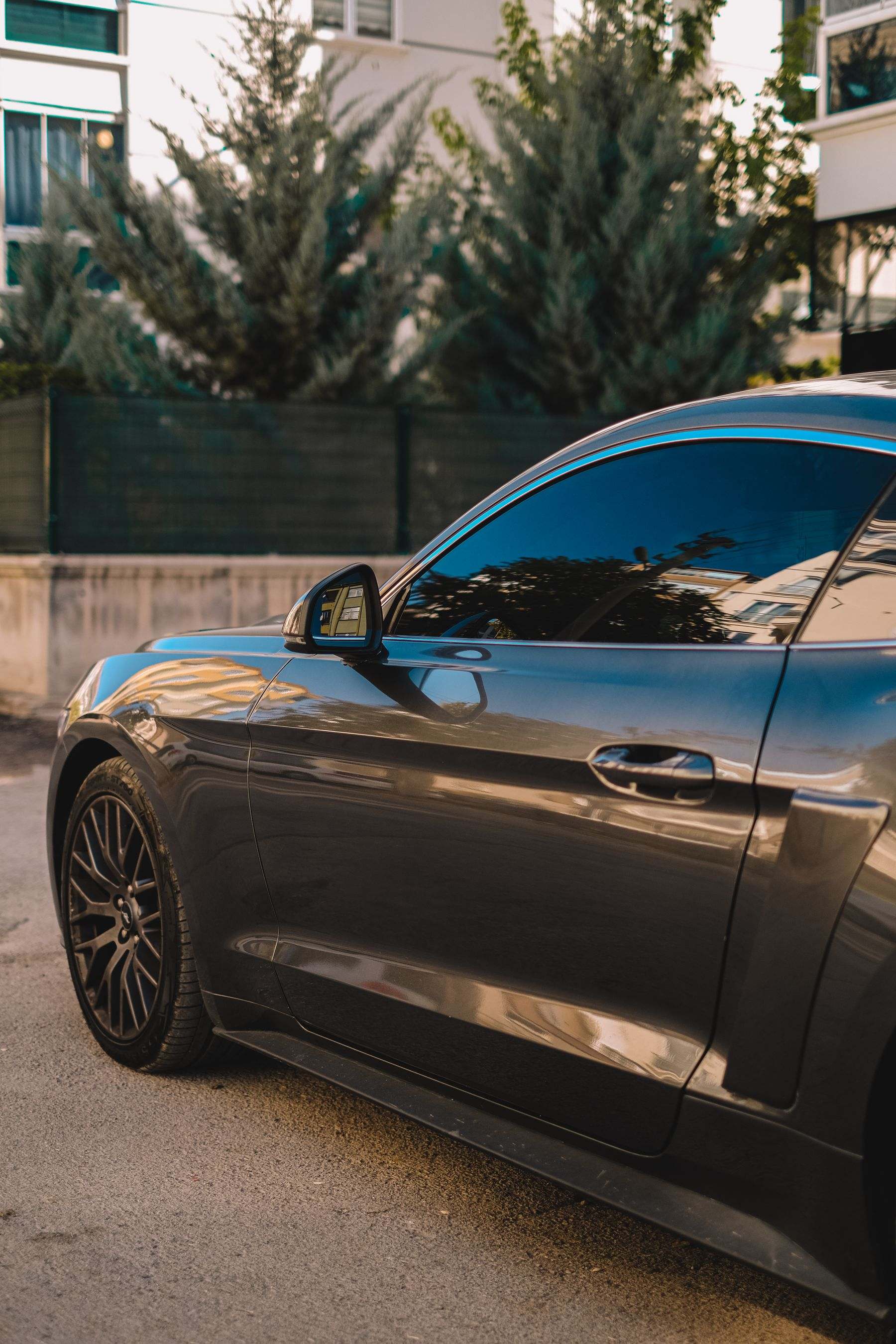
The best window tint for most drivers in 2026 is XPEL Prime XR Plus. It posts the highest total solar energy rejected (TSER) of any car film we read, 59% at the 35 shade and 71% at the 5 shade. SunTek CXP is the best value: a 53% TSER for $330 on a sedan at one shop that lists it.
We did not install or test these films. We read maker spec sheets from XPEL, SunTek, 3M and LLumar, plus shop price lists, on 18 November 2026. No brand pays us, and there are no affiliate links on this page.
Best Window Tint: Our Ranked List
- XPEL Prime XR Plus: best overall. Top TSER at every shade we compared.
- SunTek Evolve: best runner-up. 57% TSER at 35, lifetime color warranty.
- SunTek CXP: best value. 53% TSER for $330 at Tint Shop 1986.
- 3M Crystalline: best for windshields and light shades. 78% VLT at the 70 shade.
- LLumar IRX: strong ceramic alternative. 54% TSER at 35.
- 3M Ceramic IR: best mid-price 3M film. Runs lighter than its name.
What’s New in Window Tint for 2026
LLumar published fresh spec sheets in October 2026. They put its dyed, metallized, ceramic and IRX films on one page. That let us check its full ladder, not just the top film.
XPEL updated its XR Plus data sheet. The current sheet lists TSER of 52% to 71% and infrared energy rejection (IRER) of 67% to 70% across the range.
Heat claims keep growing. One shop ad says “up to 95%” heat rejection. The highest car film TSER on any maker sheet we read was 71%.
How We Researched the Best Window Tints
Maker data only. We used each maker’s own spec sheet for visible light (VLT), TSER and IRER. TSER counts all solar energy: visible light, infrared heat and UV. It is the best single number for heat rejection.
Same shade, fair fight. We compared films at the 35 shade, the most common front window choice. Our film spec ledger lists every reading.
Know the test glass. XPEL measures on 3mm clear glass. 3M and LLumar use 6mm clear glass. So a gap of a few points between brands is noise. A gap inside one brand is real.
Prices from one shop. Tint Shop 1986 in Rockville, MD posts prices for SunTek and 3M tiers side by side. We used those for price per heat point. Your local price will differ.
What we left out. Huper Optik makes ceramic films, but the sheet we found was for buildings, not cars. We did not rank it.
Window Tint Comparison Table
| Film (35 shade) | Measured VLT | TSER | IRER | Test glass |
|---|---|---|---|---|
| XPEL XR Plus 35 | 38% | 59% | 70% | 3mm |
| SunTek Evolve 35 | 38% | 57% | 64% | maker sheet |
| 3M Crystalline 35 | 40% | 57% | up to 68% (range) | 6mm |
| LLumar IRX 35 | 39% | 54% | 60% | 6mm |
| SunTek CXP 35 | 33% | 53% | 55% | maker sheet |
| 3M Ceramic IR 35 | 45% | 52% | 61% | 6mm |
| XPEL CS Black 35 (dyed) | 34% | 36% | n/a | 3mm |
The dyed baseline. XPEL’s CS Black 35 rejects 36%. Every ceramic tint here beats it by 16 to 23 points at close to the same darkness.
1. XPEL Prime XR Plus: Best Window Tint Overall
XPEL Prime XR Plus tops the TSER column at every shade we checked. XR PLUS 35 rejects 59% of solar energy. XR PLUS 5 rejects 71%, the highest car film figure we found.
Pros. IRER of 70% on its spec sheet, 99% UV protection, and strong heat rejection even in lighter shades. XR PLUS 55 still rejects 53%.
Cons. Its shade names are rough. XR PLUS 15 measures 12% and XR PLUS 20 measures 18%, so check the measured VLT against your state law.
Best for. Hot climates and anyone who wants the most heat cut per shade.
2. SunTek Evolve: Best Runner-Up
SunTek Evolve is SunTek’s top ceramic tint, and the window film most shops push as their best. Evolve 35 measures 38% VLT and rejects 57% of solar energy, with 64% IRER.
Pros. SunTek says it rejects up to 94% of infrared heat, with over 99% UV defense. It carries a lifetime warranty against change in color.
Cons. It costs more for a small gain. At Tint Shop 1986, Evolve is $575 on a sedan, $245 more than CXP for 4 more TSER points.
Best for. Buyers who want a top-tier premium ceramic window film from a big brand.
3. SunTek CXP: Best Value Window Tint
SunTek CXP 35 measures 33% VLT and rejects 53% of solar energy. That is 15 points more than SunTek’s carbon window tint at the same shade.
Pros. At Tint Shop 1986, CXP costs $330 on a sedan. That works out to $6.23 per TSER point, close to the carbon tier’s $6.05 but with far more heat cut.
Cons. It measures a bit darker than its name. A “35” that reads 33% can fail a strict front window limit on tinted glass.
Best for. Most drivers who want real heat rejection without paying for a top tier.
4. 3M Crystalline: Best for Windshields and Light Shades
3M Crystalline is a multilayer film with more than 200 layers. 3M says it rejects up to 64% of total solar energy and up to 99.9% of UV rays.
Pros. It is very light in its clear shades. CR 70 measures 78% VLT with a 43% TSER, and CR 80 measures 88% VLT with a 32% TSER. It carries the Skin Cancer Foundation Seal of Recommendation and a limited lifetime warranty.
Cons. At the 35 shade, CR BLK 35 rejects 57%, no better than SunTek Evolve. 3M does not list its price; shops set it.
Best for. A clear windshield film or a light film in strict states. See our windshield tint guide.
5. LLumar IRX: Strong Ceramic Alternative
LLumar IRX 35 measures 39% VLT and rejects 54% of solar energy, with 60% IRER. The dark IRX 05 measures 6% and rejects 62%.
Pros. LLumar’s own ladder shows IRX beats its CTX ceramic by 6 points and its dyed ATC by 19 points at the 35 shade.
Cons. On LLumar’s 6mm glass basis it trails XPEL and SunTek’s top films by a few points, which may be test noise.
Best for. Buyers whose local shop carries LLumar. The llumar irx film is a solid premium ceramic pick.
6. 3M Ceramic IR: Best Mid-Price 3M Film
3M Ceramic IR 35 rejects 52% of solar energy with 85% infrared rejection. At Tint Shop 1986, the CIR tier costs $445 on a sedan.
Pros. Good heat rejection, no metal, and 99.9% UV protection on the dark CIR 5, so it blocks nearly all UV rays. 3M says its non-metallized films won’t interfere with phones or GPS.
Cons. CIR 35 measures 45% VLT, 10 points lighter than its name. If you want a true 35% look, you may need CIR 30, which measures 37%.
Best for. Buyers who want 3M at a lower price than Crystalline.
How to Choose the Best Window Tint
Check the law first. Front side windows have strict limits in most states. Use our window tint percentage guide to find the darkest legal film for your car window glass.
Compare TSER, not ads. Ask for the maker spec sheet. Big infrared numbers are not total heat rejection.
Pick the tier, then the brand. The step from dyed to a mid ceramic tint tier gives the biggest jump, and all of them block UV rays. See our ceramic window tint guide for the full ladder.
Ask about the warranty. Lifetime warranty terms differ. Get the maker warranty card, not just a shop promise.
Best Window Tint FAQ
What is the best window tint brand?
On maker data, XPEL Prime XR Plus has the highest heat rejection we found, 59% TSER at the 35 shade. SunTek Evolve, 3M Crystalline and LLumar IRX are close behind. The installer matters too, so pick a shop that names the film and offers a written warranty.
What tint blocks the most heat?
XPEL XR PLUS 5 has the highest TSER on any car film sheet we read, 71%. At a legal 35 shade, XR Plus 35 rejects 59%. Ceramic films beat dyed and carbon window tints at the same darkness by 15 to 23 points.
Is 3M or XPEL tint better?
On the sheets we read, XPEL XR Plus 35 rejects 59% of solar energy, and 3M Crystalline 35 rejects 57%. They use different test glass, so that gap is small. 3M Crystalline is better for very light shades, with an 80 shade that measures 88% VLT.
What is the best tint for a windshield?
A clear or very light film. 3M Crystalline CR 70 measures 78% VLT and CR 80 measures 88%. LLumar AIR 80 measures 77% VLT. Check your state law, because many states require 70% on the windshield or allow film only above the AS-1 line.
What is the best value tint?
SunTek CXP. At Tint Shop 1986 it costs $330 on a sedan and rejects 53% of solar energy at the 35 shade. That is 15 points more than SunTek’s carbon film for $100 more. The top Evolve tier adds only 4 more points for $245 more.
Verdict: The Best Window Tint to Buy in 2026
The best window tint for heat is XPEL Prime XR Plus, and the best value is SunTek CXP. If you need a near-clear film for a windshield or a strict state, pick 3M Crystalline. Whatever you choose, ask for the measured VLT and TSER from the maker sheet, check the law, and get the warranty in writing before you buy the best window tint for your car.
References
Read on Nov 18, 2026. Maker figures are as published; we did not re-measure them.
- PRIME spec sheet R0523 · XPEL
- Evolve ceramic window tint · SunTek
- Window tint prices · Tint Shop 1986